
The Wealth Code Magazine · Feature Issue 04
Weekend Handyman: Small Jobs. Big Opportunities.
You may not need a revolutionary business idea to create extra income. Sometimes you need a useful skill, a few dependable tools and the ability to notice the small problems people around you already want solved.
There is an interesting gap in the modern service economy.
Many household jobs are too small to justify calling a major contractor, yet inconvenient enough that homeowners would rather not do them themselves. A shelf needs mounting. A piece of flat-pack furniture has been sitting in its box for two weeks. A gate sticks. Patio furniture needs assembling. A room needs touching up. Someone needs help with a straightforward outdoor project.
None of those problems sounds revolutionary.
That’s precisely the point.
Opportunity does not always arrive disguised as innovation. Sometimes it looks like an ordinary problem that someone nearby would gladly pay a dependable person to solve.
The Weekend Handyman Principle:
You don’t have to know how to do everything. You need to know how to do
a few useful things well—and know when a job belongs to someone more qualified.
1. Start With Small Jobs You Can Actually Do

One of the easiest mistakes in a new side hustle is starting with the question, How much can I charge?
A better first question is: What can I reliably do for another person without creating a bigger problem?
Furniture assembly is a useful example. Beds, desks, shelving units, bookcases, patio furniture and storage systems arrive in boxes every day. Some buyers enjoy assembling them. Others discover several pages into the instructions that they would happily pay someone else to finish the job.
Other approachable jobs may include hanging lightweight pictures, assembling household items, replacing simple non-specialized hardware, minor cosmetic touch-ups, basic yard cleanup and similar tasks within your experience.
Skill before sale.
Never offer a service merely because someone is willing to pay for it. Practice first. Understand the tools and materials involved. Know what a good finished result should look like. If you cannot confidently complete the work safely, don’t sell the service yet.
Flat-pack furniture can use several types of fasteners. A useful bit assortment can reduce wasted time and help prevent using the wrong tool on the hardware.
View Furniture-Assembly Bit Set on Amazon →2. Small Home Repairs: Know the Difference Between Simple and Specialized

The phrase small repair can be misleading.
Replacing a cabinet knob and repairing an electrical circuit are both technically repairs. They do not carry remotely the same skill requirements, risk or legal responsibilities.
Good weekend work tends to be clearly defined. The customer can explain the desired result, you can inspect the situation before committing, and the work sits comfortably inside your knowledge and local rules.
Examples might include simple furniture fixes, non-structural cosmetic touch-ups, basic hardware adjustments and straightforward installations where you understand both the surface and the fastening method.
Before accepting a job, ask:
- Have I successfully done this type of work before?
- Do I understand what is behind or beneath the surface I’m working on?
- Could a mistake cause significant property damage or injury?
- Does the work require a permit, licence or certified professional?
- Do I have the correct tools and safety equipment?
- Am I properly insured for the work I am offering?
A professional reputation is built just as much by the jobs you decline as the jobs you accept.
3. Look Outside the House

Outdoor work creates another category of small local problems.
Seasonal cleanup, straightforward garden work, patio furniture assembly, minor non-structural fence or gate maintenance, basic exterior cleanup and similar jobs can become opportunities where permitted and where they fit your skills.
The advantage is visibility. A good outdoor job is often seen by neighbors. That can turn one customer into a conversation with the person next door.
Seasonality also matters. Spring cleanup, summer maintenance and autumn preparation create different needs. Rather than offering every possible service, think about what people are likely to need now.
Look for recurring inconvenience.
A problem that returns every season may be more interesting than a one-time job. Reliable recurring work can be more valuable than constantly searching for new customers.
4. Build a Weekend Tool Kit That Earns Its Keep
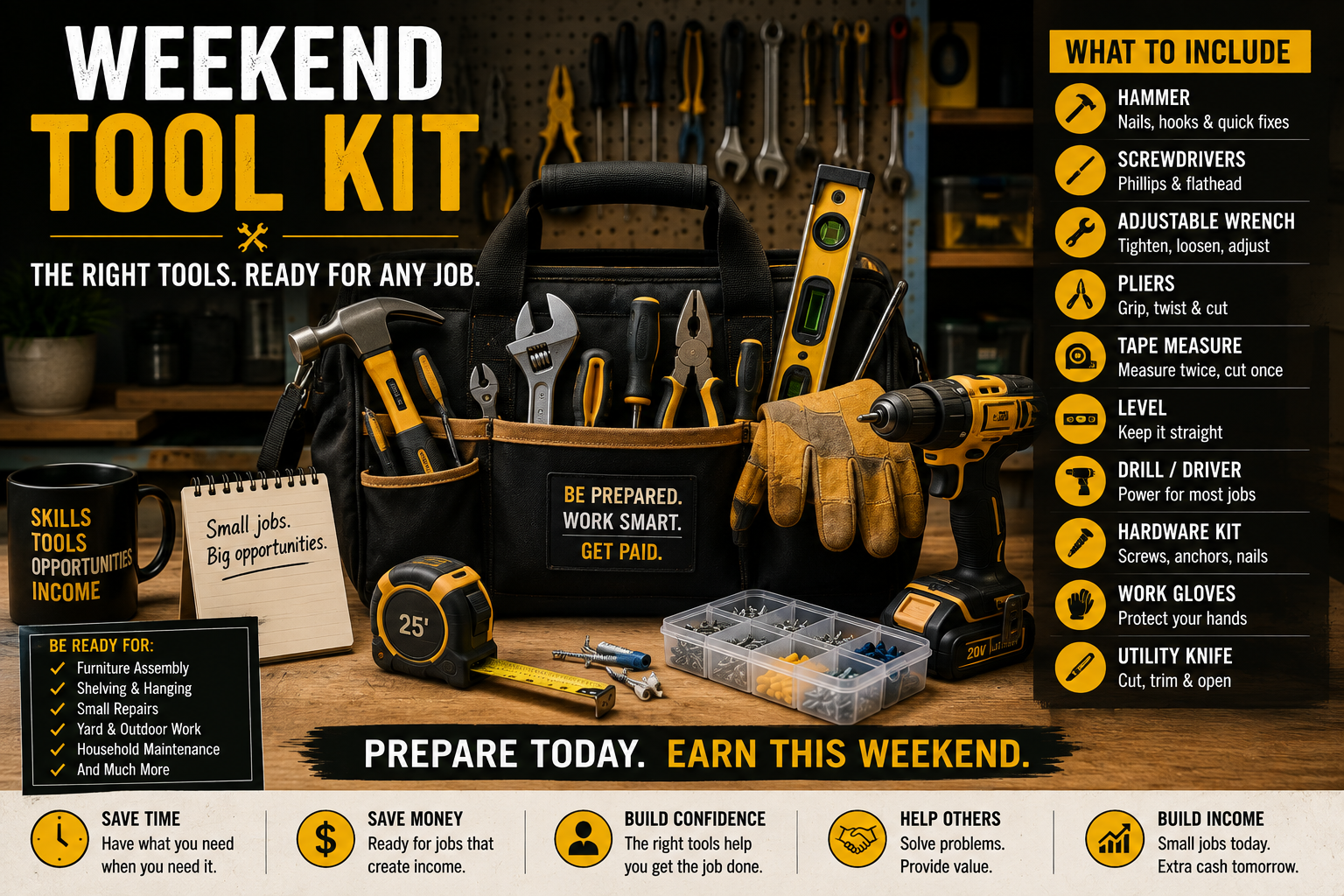
Walking through a hardware store can make a simple side hustle suddenly feel very expensive.
It doesn’t have to be.
Start with tools that solve several problems. Add specialized equipment only when your work justifies it. A tool that sits unused on a shelf isn’t helping your business merely because it looks professional.
Cordless Drill / Driver
Useful for furniture assembly, driving screws, installing appropriate hardware and many routine household projects.
View Cordless Drill / Driver on Amazon →Basic Hand-Tool Kit
Screwdrivers, pliers, wrenches and other basics handle a surprising number of straightforward jobs and adjustments.
View Basic Hand-Tool Kit on Amazon →Stud Finder
Knowing what is behind a wall matters before mounting appropriate objects. Never assume a wall is empty simply because you cannot see what is inside it.
View Stud Finder on Amazon →Laser Measuring Tool
Fast measurements can help with room dimensions, furniture placement, estimating materials and planning straightforward projects.
View Laser Measuring Tool on Amazon →Tool Bag or Belt
Organization saves time. Keeping frequently used tools together makes it easier to arrive prepared and avoid repeated trips back to the vehicle.
View Tool Bag / Belt on Amazon →Level
Shelves, pictures and appropriate hardware installations immediately look better when they’re straight. Small details affect how customers perceive the entire job.
View Level on Amazon →Furniture-Assembly Bit Set
Keeping commonly used bits available can make furniture assembly quicker while helping protect fasteners from damage caused by poorly fitting tools.
View Furniture-Assembly Bit Set on Amazon →Compact Step Ladder
For appropriate low-height tasks, a stable step ladder may be useful. Follow its rated capacity, placement and manufacturer safety instructions.
View Compact Step Ladder on Amazon →Don’t confuse buying equipment with building a business. Start with a small set of tools you know how to use. Let actual customer needs tell you what deserves to be added next.
5. Price the Job, Not Just the Hour
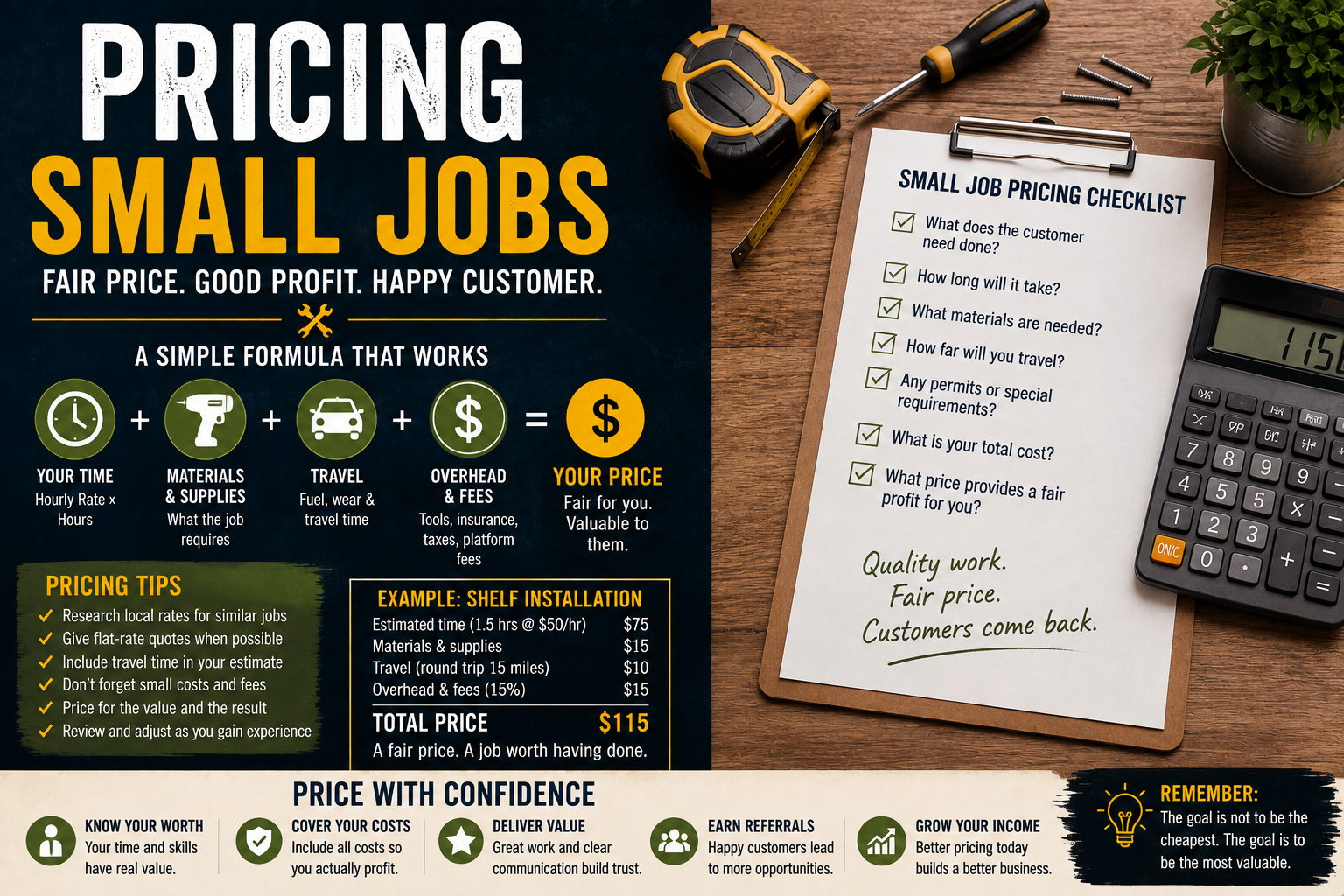
Small jobs create an unusual pricing problem.
A task may take only an hour once you’re standing in the customer’s home, but the job also includes communication, travel, preparation, tools, materials, cleanup, payment processing, bookkeeping and possibly the time spent estimating the work.
If you price only the minutes spent holding the screwdriver, you may discover that a busy Saturday produced surprisingly little profit.
A useful estimate considers:
- Your expected working time
- Travel and setup time
- Materials and consumable supplies
- Tool wear and equipment costs
- Marketplace or payment fees
- Insurance and legitimate business overhead
- Applicable taxes
- The difficulty and value of the work
Research your own market rather than copying somebody else’s rate from another city or country. The appropriate price depends on the service, location, experience, competition and business costs.
Give the customer clarity.
When practical, explain what the quoted price includes before beginning. If the scope changes after work starts, discuss the change rather than surprising the customer at the end.
6. Your First Customers May Already Know You

A new service business does not necessarily need an elaborate advertising campaign.
Start close to home.
Friends, relatives, coworkers and neighbors may already know someone who needs the exact small service you’re offering. Local community groups, classified platforms and legitimate service marketplaces may provide additional opportunities where their rules allow.
Be specific about what you do. “I do anything” creates uncertainty. “I assemble flat-pack furniture and patio furniture on Saturdays” tells people exactly when to think of you.
The first job is also marketing.
Arrive when you said you would. Communicate clearly. Respect the customer’s home. Clean up. Explain the result. If something goes wrong, address it professionally.
Then, when appropriate, ask a satisfied customer for a review or referral.
Your reputation compounds.
One well-completed $100 job can be more valuable than the immediate payment
if it leads to trust, a review, a referral and another customer.
7. Don’t Try to Become the Cheapest Handyman in Town
Low price can attract attention, but it is a difficult advantage to defend. Someone can always offer to work for less.
A more durable advantage is reliability.
People remember the person who answered the message, arrived as promised, explained the work clearly, treated the property carefully and completed the agreed job.
That doesn’t mean charging whatever you want. It means trying to create a fair exchange: a price the customer understands and value that makes the price worthwhile.
The customer isn’t merely buying an hour of your Saturday. They are buying a solved problem.
8. The Jobs You Should Avoid
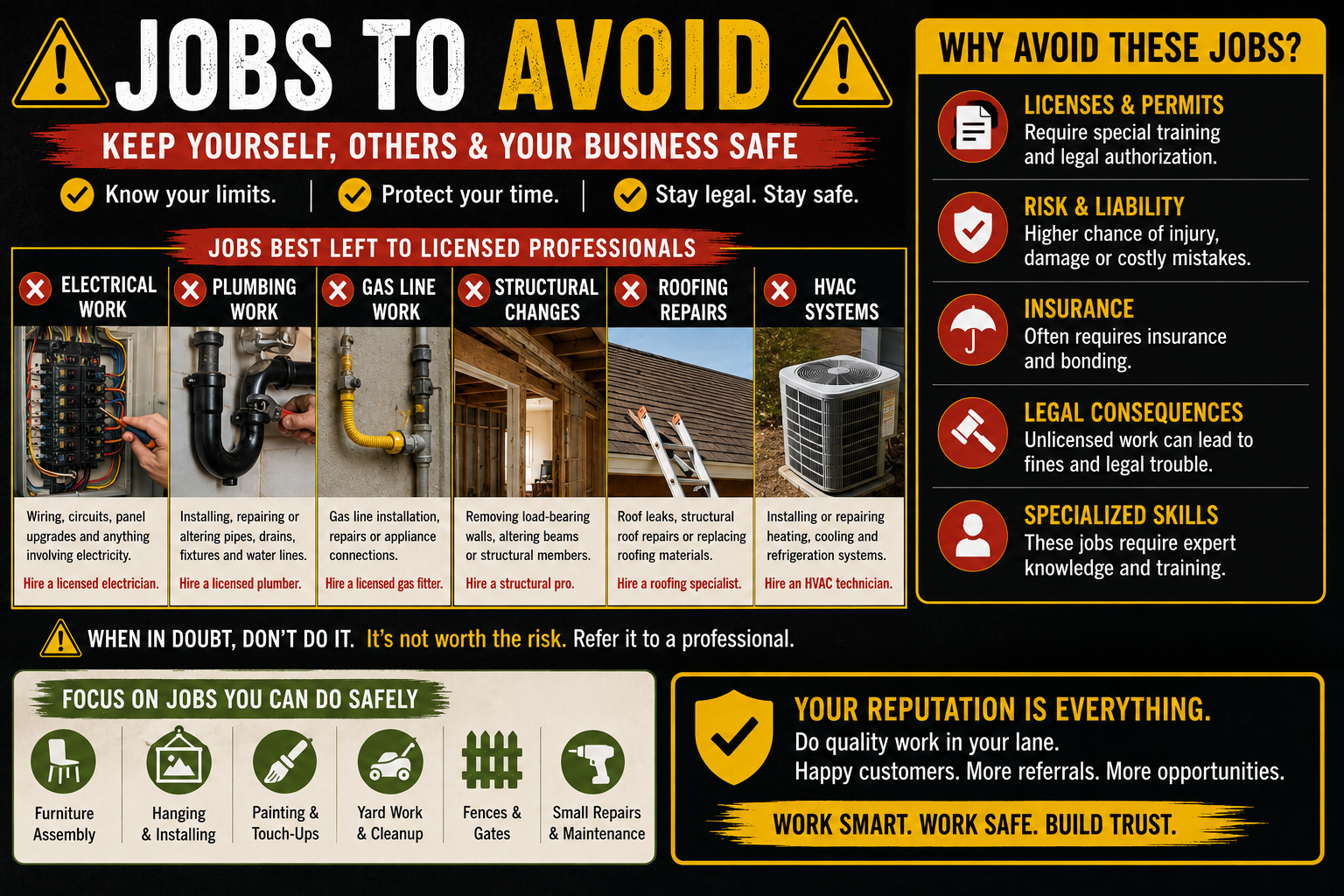
There is no prize for accepting every request.
Electrical systems, gas work, major plumbing, structural changes, roofing, HVAC systems and other specialized categories can involve serious hazards, licensing, permits, codes and insurance requirements.
Exactly where the legal line sits varies by jurisdiction. Even apparently minor work can be regulated in some locations.
Before advertising a service, check the rules where you operate. If the job requires qualifications you do not have, refer the customer to the appropriate professional.
“I don’t do that type of work” is a professional answer.
Knowing your limits protects the customer, their property, your reputation and potentially your livelihood.
9. Think Like a Small Business Before You Call It One
The moment money changes hands, the work deserves more thought than an informal favor between neighbors.
Depending on where you live and the type of service, you may need to consider business registration, licences, insurance, taxes, record keeping, permits, contracts, consumer-protection rules and marketplace requirements.
You should also think about what happens when something goes wrong.
What if you accidentally damage a customer’s wall? What if you are injured on their property? What if a piece of furniture fails after assembly? Those questions aren’t reasons to abandon the idea. They’re reasons to treat paid work seriously.
Start small enough that you can learn how the business works before creating unnecessary complexity.
10. Track What You Actually Earn
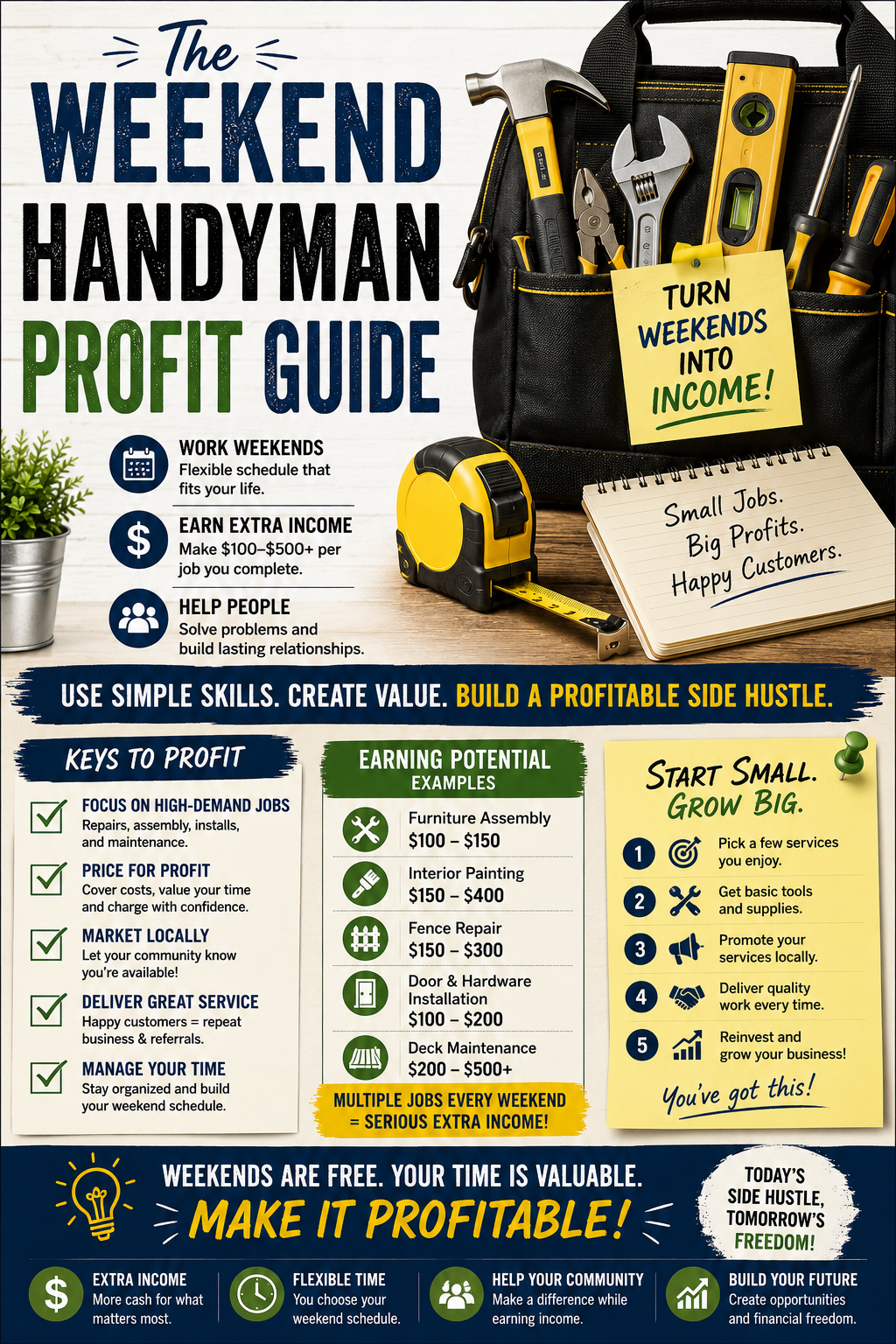
Revenue feels exciting because it is visible. Profit requires more attention.
Suppose several weekend jobs bring in a respectable amount of money. Before deciding the side hustle is successful, subtract the costs required to produce that revenue.
- Materials
- Fuel and transportation
- Tools and replacement equipment
- Insurance
- Marketplace and payment fees
- Advertising
- Taxes and required registrations
- Unpaid estimating and administrative time
Then consider the hours involved.
A side hustle that produces revenue while consuming every free evening may not be serving the life you wanted it to support.
Measure profit in money and time.
Extra income matters. So does understanding what you exchanged to earn it.
11. Let the Customers Tell You What Comes Next
Perhaps you begin by assembling furniture and discover that customers constantly ask about shelving. You learn the appropriate skills and local requirements, and shelving becomes another service.
Perhaps outdoor furniture assembly produces repeated requests for seasonal patio setup. Or perhaps you discover you dislike home repairs entirely but enjoy furniture assembly.
That information is valuable.
You don’t have to design the finished business on day one. A small side hustle can evolve through observation.
Keep the services that produce reasonable profit, fit your skills and attract customers you enjoy working with. Drop the ones that create excessive difficulty, risk or poor returns.
Growth doesn’t always mean offering more. Sometimes it means becoming known for fewer things.
The Bigger Wealth Lesson
The Weekend Handyman is really a story about the economics of usefulness.
People exchange money because they want a result. They want the shelf up, the furniture assembled, the yard cleaned or the nagging little project finally crossed off the list.
The opportunity belongs to the person capable of solving that problem safely, legally and reliably at a price that makes sense for both sides.
This principle extends far beyond handyman work.
You can spend years searching for the perfect side hustle, or you can begin looking at the ordinary frustrations around you and asking a much simpler question:
What useful problem can I solve well?
A useful skill is an asset. A reputation is an asset. The ability to recognize unmet needs is an asset.
And unlike many financial assets, those can sometimes be built before you have much money at all.
Continue Your Wealth Journey
Explore More from Rich Abbott
Building wealth is not only about earning more. It is also about recognizing opportunity, understanding your motivations and making deliberate decisions about where your time and abilities can create value.
Take the Wealth Mindset Assessment
Explore how your beliefs about money, capability, abundance and action may be influencing the financial decisions you make.
Take the Free Wealth Mindset Assessment →
Your Million-Dollar Why
Income becomes more meaningful when you understand what you are building toward. Explore the role purpose can play in motivation, decisions and long-term financial direction.
Explore Your Million-Dollar Why →
The Millionaire Mindset
Explore the psychology behind wealth-building behavior and the beliefs, habits and decisions that influence financial progress.
Explore The Millionaire Mindset →
Keep Reading Wealth Code Magazine
Explore more feature issues about practical opportunities, wealth psychology, financial thinking and unconventional ways to recognize value.
Coming in Feature Issue 05
A Special Issue for Women & Wealth
Feature Issue 05 turns the Wealth Code lens toward women—the realities of earning, saving, investing, career decisions, family responsibilities and building financial independence on your own terms.
We’ll explore the difference between earning a good income and actually building wealth, the financial decisions that can become more important with time, and why financial freedom is about far more than the number on a paycheck.
Issue 05 is coming soon.
Return to Wealth Code Magazine →Editorial, Safety and Affiliate Disclosure
This feature is provided for general educational and informational purposes. It does not provide legal, tax, financial, licensing, insurance, electrical, plumbing, structural, construction, occupational-safety or other professional advice.
Requirements vary by location and type of work. Readers should verify applicable laws, licences, permits, business registration, insurance, zoning, platform rules, building codes, safety procedures and professional requirements before advertising or performing paid services.
Do not undertake work beyond your competence or work that legally requires a licensed, certified or otherwise qualified professional. Tools and equipment should always be used according to manufacturer instructions and appropriate safety procedures.
Any dollar amounts appearing in illustrations or examples are simplified examples rather than earnings promises or recommended prices. Actual demand, revenue, expenses, taxes, travel, equipment costs, customer acquisition, time requirements and profit vary substantially.
Some links in this issue are affiliate links. RichAbbott.com may earn a commission from qualifying purchases at no additional cost to the buyer. Product recommendations are included because they relate to the subject being discussed. As an Amazon Associate I earn from qualifying purchases. Some books and resources featured by Wealth Code Magazine are written or published by Rich Abbott.